

Discovering water on your basement floor can be alarming, but it does not always mean you have a leaking foundation wall. In many cases, water is actually entering from beneath the basement floor as rising groundwater creates hydrostatic pressure beneath the concrete slab. This guide explains why it happens, how to identify the true source of the water, and how to determine the most appropriate solution.
Reading time: 6–8 minutes
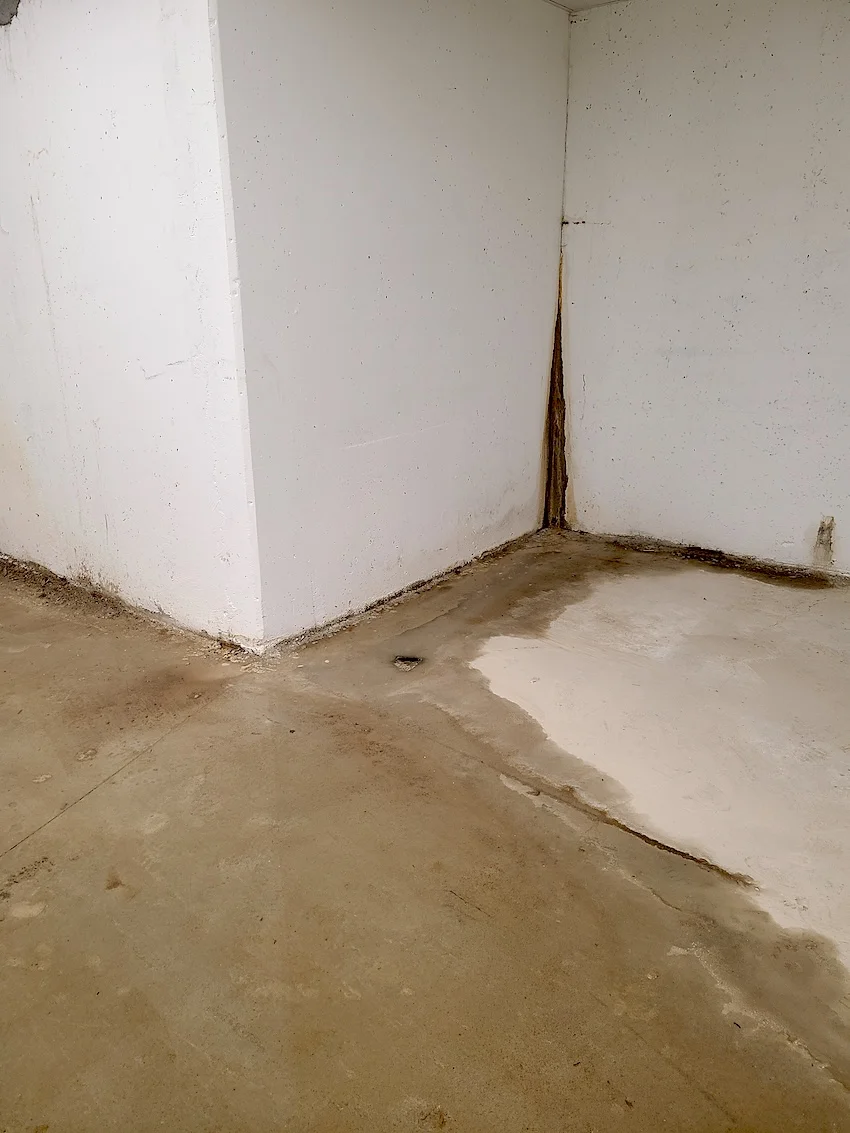 Water entering at the cove joint where the basement floor meets the foundation wall. Damp staining and water on the floor are common signs of groundwater seepage beneath the basement slab.
Quick Answer
Water coming up through a basement floor is usually caused by groundwater rising beneath the concrete floor. As the water table rises, hydrostatic pressure forces water through the cove joint, floor cracks, or other openings in the slab. While foundation wall leaks are common, water on the basement floor without evidence of a wall leak often indicates a high groundwater table beneath the home. Correcting the problem begins with identifying exactly where the water is entering before selecting the appropriate repair method.
Key Takeaways
- Water on the basement floor is not always caused by a leaking foundation wall.
- Groundwater can enter through the cove joint and basement floor cracks.
- Hydrostatic pressure is the driving force behind most basement floor seepage.
- Correct diagnosis should come before selecting a repair.
Table of Contents
- How Does Water Get Into a Basement?
- Why Groundwater Comes Up Through the Basement Floor
- What Is the Cove Joint?
- Other Causes of a High Water Table
- How Can You Tell if Water Is Coming From Beneath the Floor?
- Could It Be a Plumbing Leak?
- Why Sealing Floor Cracks Usually Doesn't Work
- The Permanent Solution
- What Can Homeowners Do?
How Does Water Get Into a Basement?
If water is not entering through the foundation wall, it generally will come from one of three sources:
- Groundwater rising beneath the basement floor;
- Water flowing over the top of the foundation wall; and
- A plumbing leak within the home.
This article focuses on groundwater entering the basement from beneath the concrete floor. The diagram below illustrates several of the most common ways water can enter a basement. If your leak looks different from water coming up through the floor, you can also explore our other common basement leak types to help identify the true source before choosing a repair.
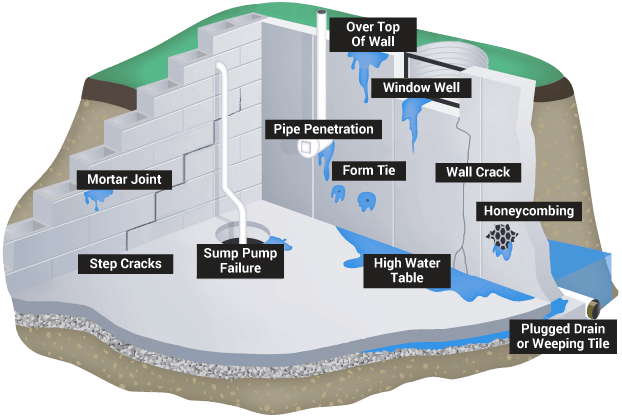
Common sources of basement leaks include groundwater beneath the floor, foundation cracks, cove joint seepage, window well leaks, and water entering over the foundation wall. Correctly identifying the source is the first step toward selecting the right repair.
Why Groundwater Comes Up Through the Basement Floor
The soil beneath your basement floor contains groundwater. During periods of heavy rainfall and rapid snowmelt, the level of the groundwater can rise significantly, creating sufficient hydrostatic pressure beneath the concrete floor slab to force water into the basement through gaps and leave puddles on the basement floor.
The short video below shows actual groundwater being forced upward through a basement floor as hydrostatic pressure builds beneath the slab. While less common than cove joint seepage, it demonstrates just how much pressure groundwater can exert beneath a home.
Actual groundwater being forced upward through a basement floor by hydrostatic pressure beneath the concrete slab. This type of seepage typically occurs when the water table rises after prolonged rainfall or rapid snowmelt.
Although dramatic, this type of floor seepage is actually less common than water travelling on the basement floor after entering through a leaking foundation crack hidden behind finished walls or insulation. Correct diagnosis is essential before choosing a repair method.
Several factors influence rising groundwater and consequently hydrostatic pressure, including:
- Heavy or prolonged rainfall;
- Rapid snowmelt;
- Soil type surrounding the home;
- Local drainage and hydrological conditions;
- Downspouts discharging next to the foundation;
- Blocked or deteriorated weeping tile and poor drainage to the storm sewer;
- Downspouts discharging into weeping tile; and
- Poor grading / landscaping around the home.
As groundwater rises, pressure builds beneath the basement floor. Water naturally seeks the easiest path to escape (path of least resistance).
The most common entry points in order of likelihood are:
- The cove joint (where the basement floor meets the foundation wall);
- Basement floor cracks; and
- Penetrations through the basement floor, such as support posts, plumbing penetrations and floor drains.
When hydrostatic pressure becomes great enough, water is forced upward through these openings.
What Is the Cove Joint (Wall-Floor Joint)?
The cove joint is the seam where the basement floor meets the foundation wall.
Although it may appear seamless, the floor and wall are poured separately during construction, leaving a small gap/joint between them.
When groundwater rises beneath the floor, this joint is commonly the path of least resistance, allowing water to seep into the basement.
Cove joint seepage is one of the most common causes of wet basement floors.
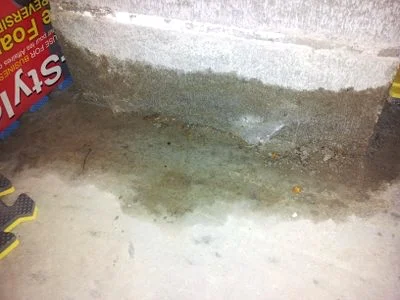
Groundwater commonly enters a basement through the cove joint, where the foundation wall meets the basement floor. Mineral staining and standing water are common indicators of long-term seepage.
Other Causes of a High Water Table
In addition to the factors affecting groundwater levels identified earlier, there are other contributors to conditions allowing groundwater levels around a home to become unusually high.
Sump Pump Failure
If the sump pump stops working, groundwater is no longer removed from the weeping tile system and consequently water builds up at the base of the foundation wall (footing). Water levels can rise quickly, eventually forcing water into the basement from beneath the basement floor.
Poor Footing Drainage
Older homes often have partially clogged or deteriorated weeping tile systems. When footing drainage becomes ineffective, groundwater accumulates beside and beneath the foundation.
Downspout Problems
Downspouts that discharge too close to the home can significantly increase groundwater levels around the foundation. Also, when downspout discharge is routed directly into the weeping tile, the groundwater level at the footing rises dramatically.
How Can You Tell if Water Is Coming From Beneath the Floor?
It can be very difficult to positively ascertain that a puddle in the basement is the result of water coming up from beneath the basement floor. The following signs are commonly associated with a high water table under the basement floor:
- The presence of water along the wall-floor (cove) joint;
- Sediment (mud) appearing at the cove joint;
- Water entering through floor cracks or staining along floor cracks;
- Puddles appear on the basement floor after heavy rain or snowmelt;
- The sump pit water level rises noticeably during heavy rains;
- There are no visible leaks in the foundation wall that would account for the presence of water on the floor; and
- Water appearing over a broad area rather than one isolated location.
If these conditions exist, groundwater beneath the floor is often the cause.
Could It Be a Plumbing Leak?
Not every wet basement is caused by high groundwater levels.
Possible plumbing sources include:
- Leaking water supply pipes;
- Drain pipe leaks;
- Water heater failures;
- Furnace humidifier leaks; and
- Air conditioning condensate drains.
Before agreeing to have your foundation waterproofed, plumbing leaks should always be ruled out first.
Why Sealing Floor Cracks Usually Doesn't Work
Many homeowners attempt to seal basement floor cracks or the cove joint with caulking, hydraulic cement, or waterproof coatings. Unfortunately, these repairs rarely succeed when hydrostatic pressure is the underlying problem. Water under pressure beneath the basement floor simply finds another pathway into the basement.
Successful repairs address the rising groundwater condition—not just the visible leak source.
The Permanent Solution
When groundwater beneath the basement floor is responsible for a basement leak, the most reliable long-term solution is typically an interior perimeter drainage system with a properly functioning sump pump.
- Collects groundwater beneath the floor;
- Relieves hydrostatic pressure;
- Directs water into a sump basin; and
- Evacuates the collected water.
Rather than trying to seal against water under pressure beneath the floor, the system manages groundwater before it can seep into the basement.
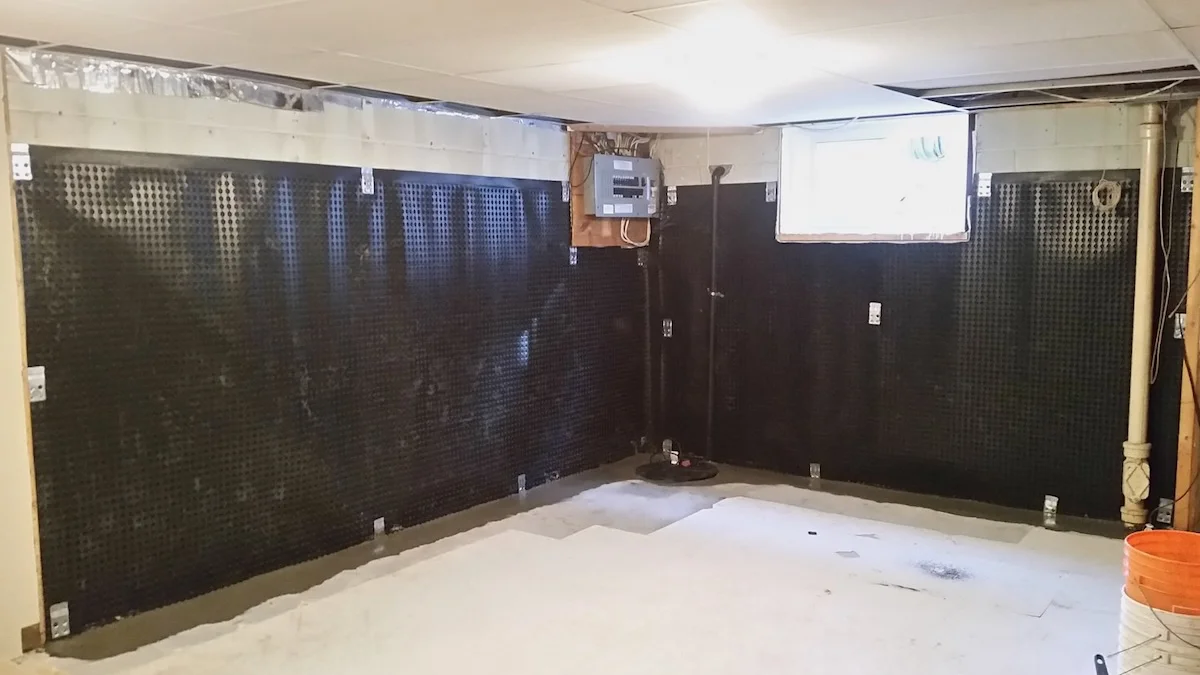
A professionally installed interior basement waterproofing system relieves hydrostatic pressure beneath the basement floor by collecting groundwater and directing it into the drainage system before it can reach the basement surface.
What Can Homeowners Do?
Since there are multiple causes for high groundwater levels beneath your basement it is wise to eliminate the causes, where possible, before investing in waterproofing repairs. Homeowners can often mitigate high groundwater problems by:
- Extending downspouts away from the home;
- Maintaining proper grading around the foundation;
- Keeping eavestroughs clean;
- Disconnecting downspout drains from the weeping tile system; and
- Testing sump pump operation regularly.
While these measures help, they may not entirely eliminate seepage when groundwater levels become exceptionally high.
Conclusion
Water coming up through a basement floor is usually a symptom of elevated groundwater beneath the home rather than a leaking foundation wall.
Understanding the source of the water is essential before selecting a repair method. In many cases, sealing floor cracks will not solve the problem because hydrostatic pressure continues to force groundwater upward.
A proper diagnosis allows the most effective long-term solution to be chosen, helping protect both the basement and the home's foundation from future water damage.
Identifying the true source of basement water before choosing a repair method can save homeowners considerable time, frustration, and unnecessary expense.
Frequently Asked Questions
Can water come up through an uncracked basement floor?
Yes. Water can enter through the cove joint, construction joints and floor penetrations even if the floor itself has no visible cracks.
What is hydrostatic pressure?
Hydrostatic pressure is the force created when groundwater builds up beneath and around a home's foundation. As this pressure increases, water is forced through the weakest openings in the basement, such as the cove joint, basement floor cracks, and other penetrations.
Should I seal basement floor cracks?
If hydrostatic pressure is causing the leak, sealing floor cracks alone is rarely a permanent solution.
Can heavy rain cause basement floor seepage?
Yes. Heavy rainfall and rapid snowmelt commonly raise groundwater levels beneath the basement floor.
When should I call a waterproofing specialist?
If water repeatedly enters your basement after rainfall or snowmelt, a professional inspection can identify the true source before unnecessary repairs are made.
Need Help Identifying the Source of Your Basement Leak?
Water on a basement floor is not always caused by a leaking foundation wall. If you're unsure whether the water is coming from beneath the floor, a leaking foundation crack, the cove joint, or another source, we can help identify the problem.
Text us a few clear photos of the affected area, and one of our waterproofing specialists will review them and recommend the most appropriate solution before you commit to any repair.