

Foundation Crack Repair for Leaking Basement Walls
Have water coming through a crack in your poured concrete foundation? AquaGuard Injection & Waterproofing® repairs leaking basement wall cracks from inside your home using professional polyurethane crack injection — usually without digging.
For faster guidance or a quicker quote, text photos of the crack to
289-366-1577.
Family-owned and operated for over 24 years — you’ll speak directly with an experienced technician, not a commissioned salesperson.
Is This the Kind of Foundation Crack You Have?
Foundation cracks often develop due to concrete shrinkage or foundation settlement. Because they are long, narrow openings in the concrete foundation wall, they often begin leaking during heavy rain, spring thaw, or when the soil around the house becomes saturated. If one of these situations looks familiar, polyurethane crack injection may be the right repair solution.
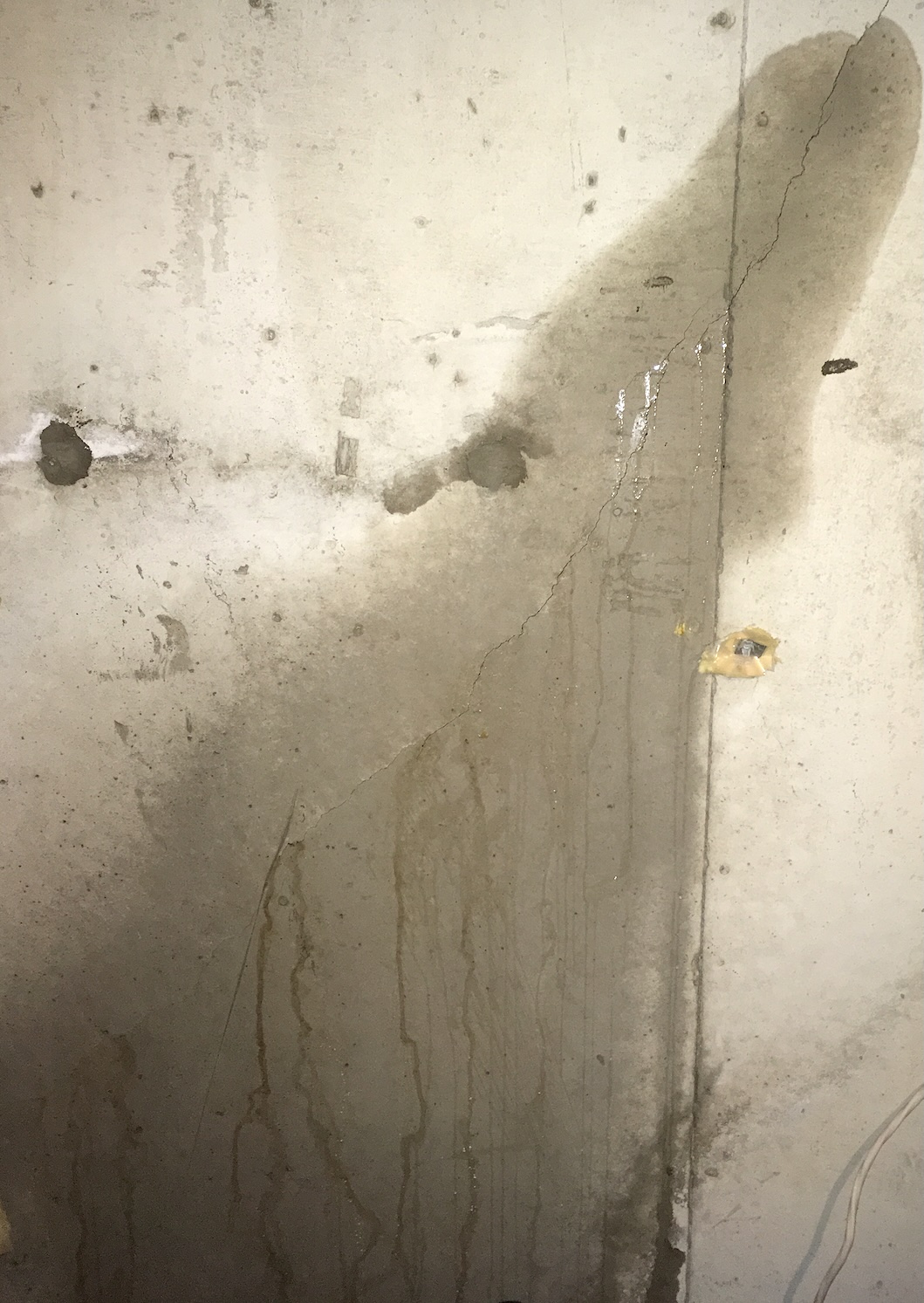
Active Leaking Wall Crack
Water is visibly coming through a vertical or diagonal crack in your poured concrete basement wall.
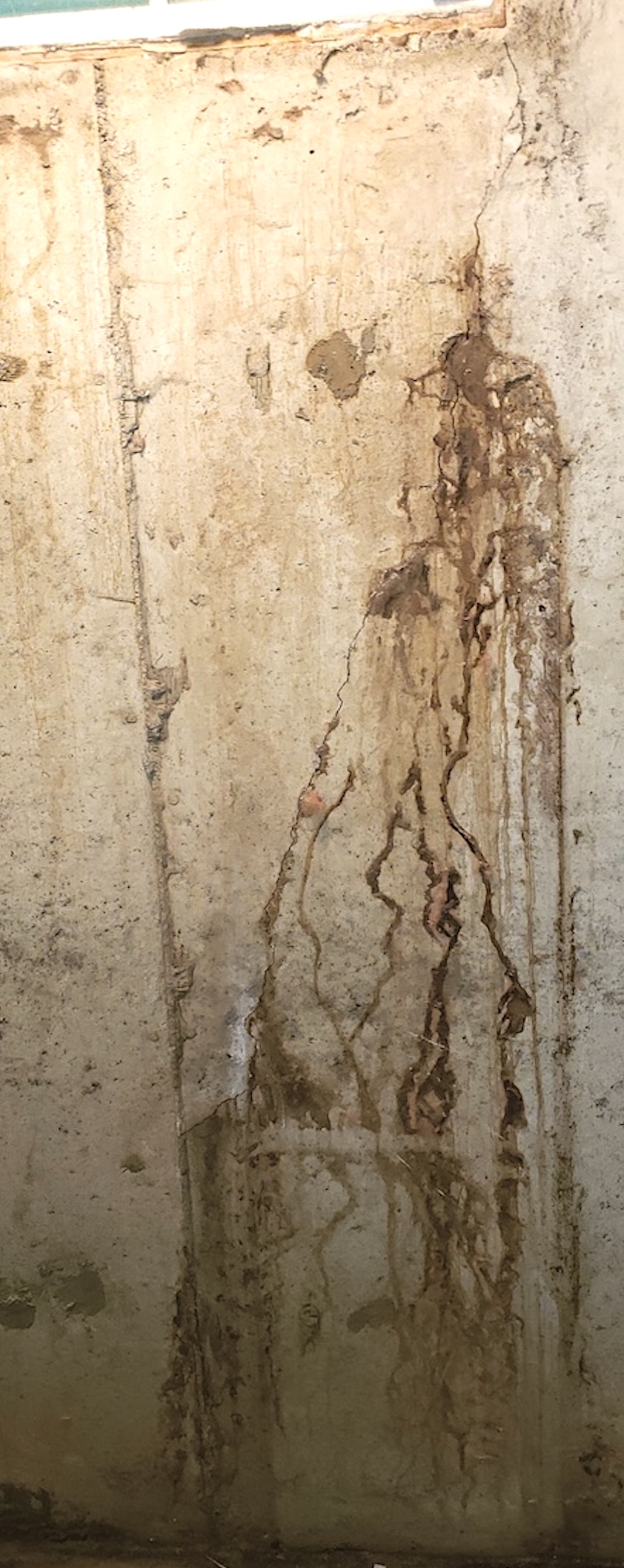
Crack With Mud or Mineral Staining
Brown staining, white mineral deposits, or dampness / darkness along the crack usually indicate repeated water entry over time.
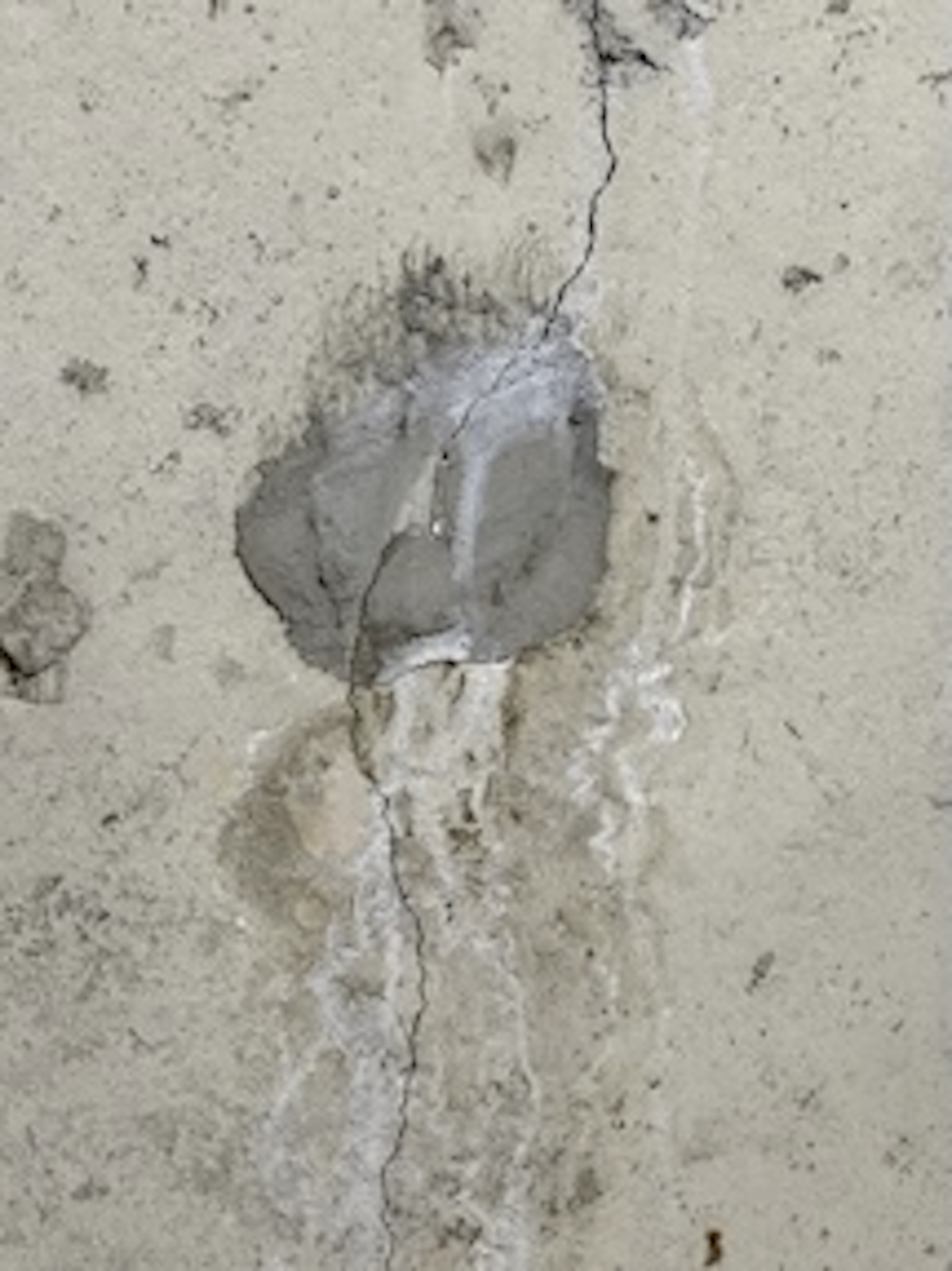
Leaking Tie-Rod Hole With Nearby Crack
Some poured concrete foundations develop leaks at forming tie-rod holes; weak points through which cracks can develop.
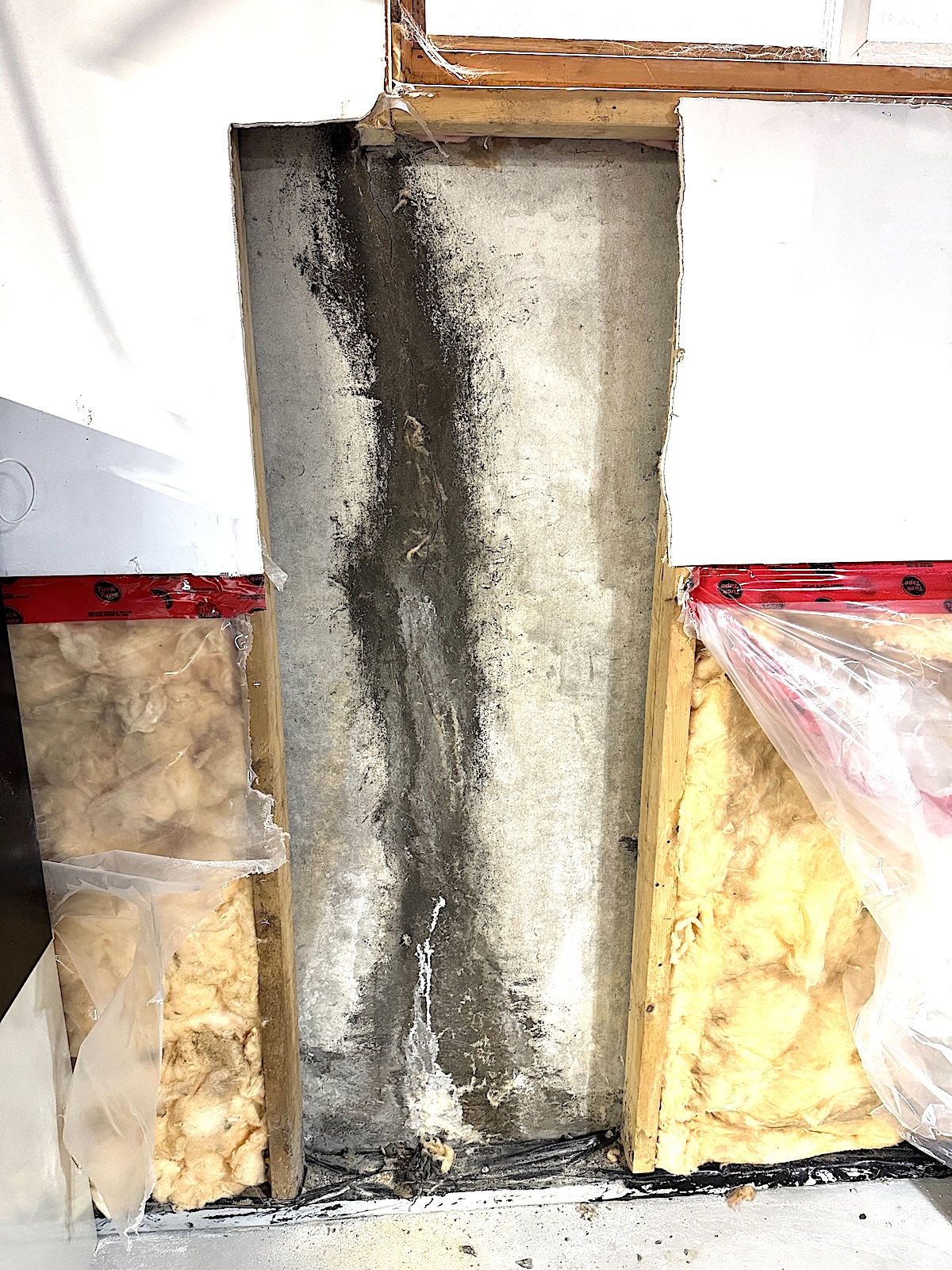
Previously Repaired Crack Still Leaking
Surface patches, improper injections, or improper exterior repairs often leak again.
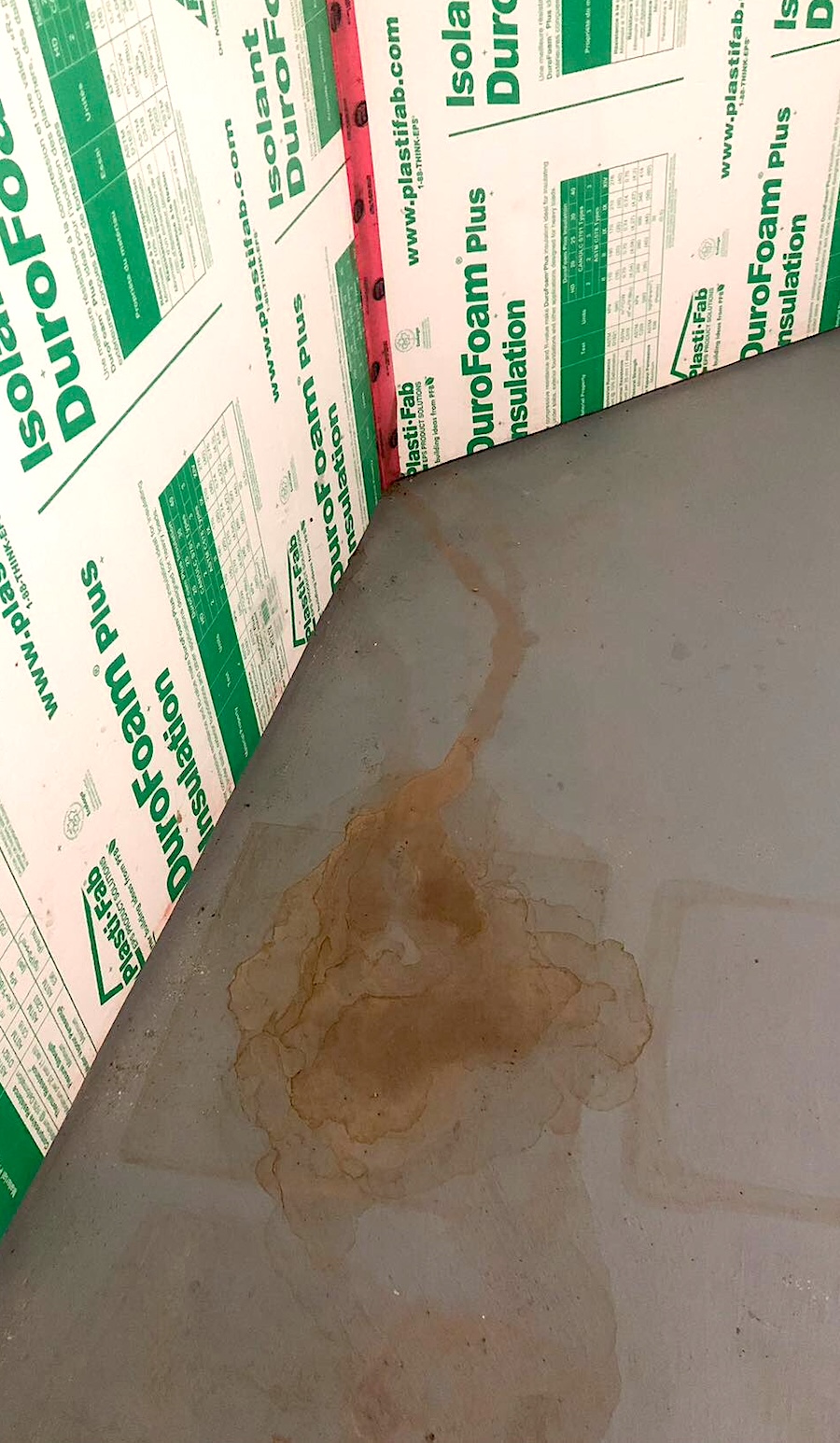
Finished Basement Leak or Puddle
Water on the floor near finished drywall or insulation can be caused by a hidden foundation crack, tie-rod hole, or some other wall seepage.
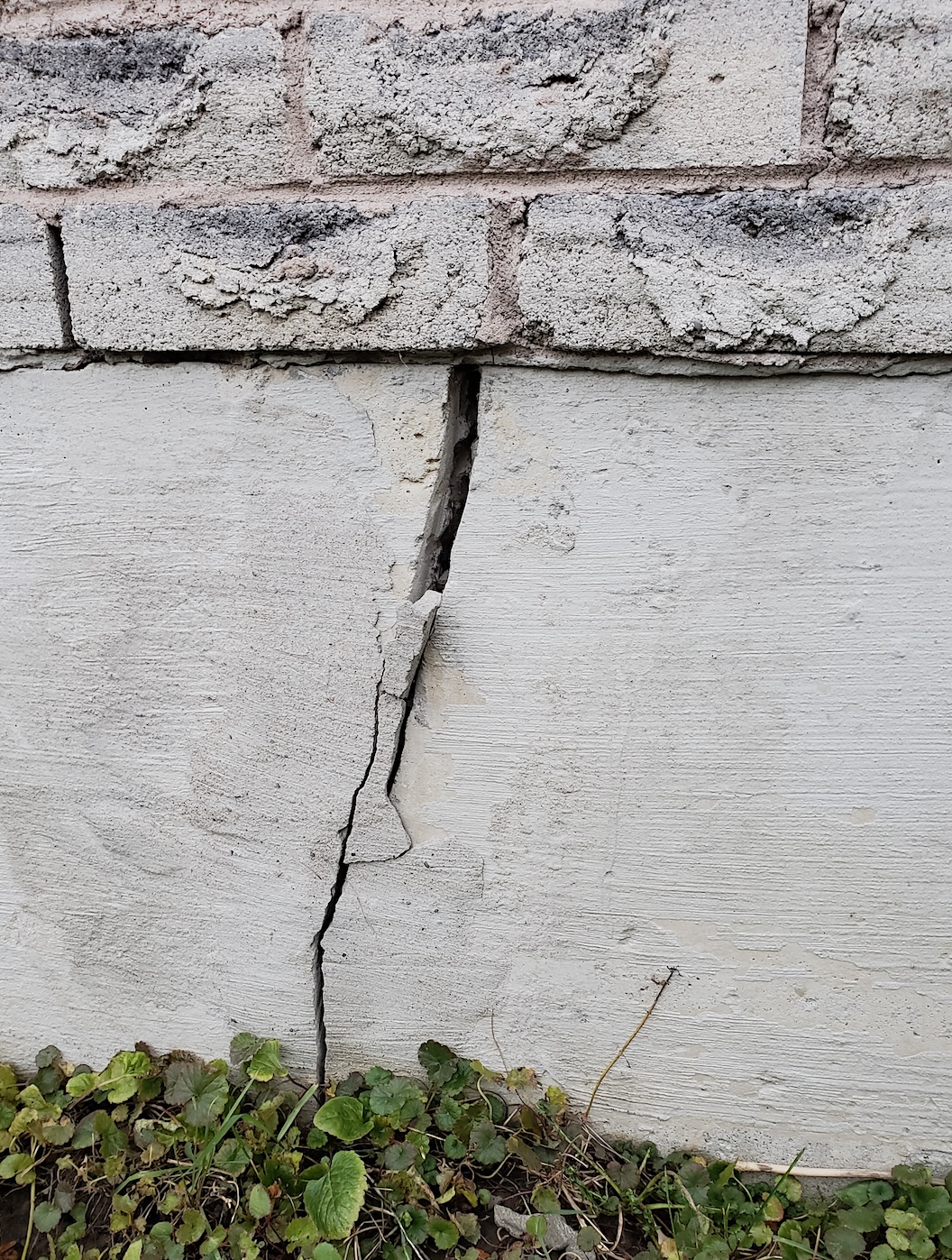
Visible Exterior Foundation Crack
A foundation crack noticed outside the home highlights the risk of water entry into the basement and potential structural issues.
Text photos to 289-366-1577 and we’ll gladly help identify what the problem is.
What Causes Foundation Cracks?
Cracks in poured concrete foundations are common and the vast majority should not be a cause for concern. Some cracks remain dry, while others become pathways for water during heavy rain, spring thaw, or when soil around the home becomes saturated. Whether a crack leaks depends on underground conditions, which can change over time.
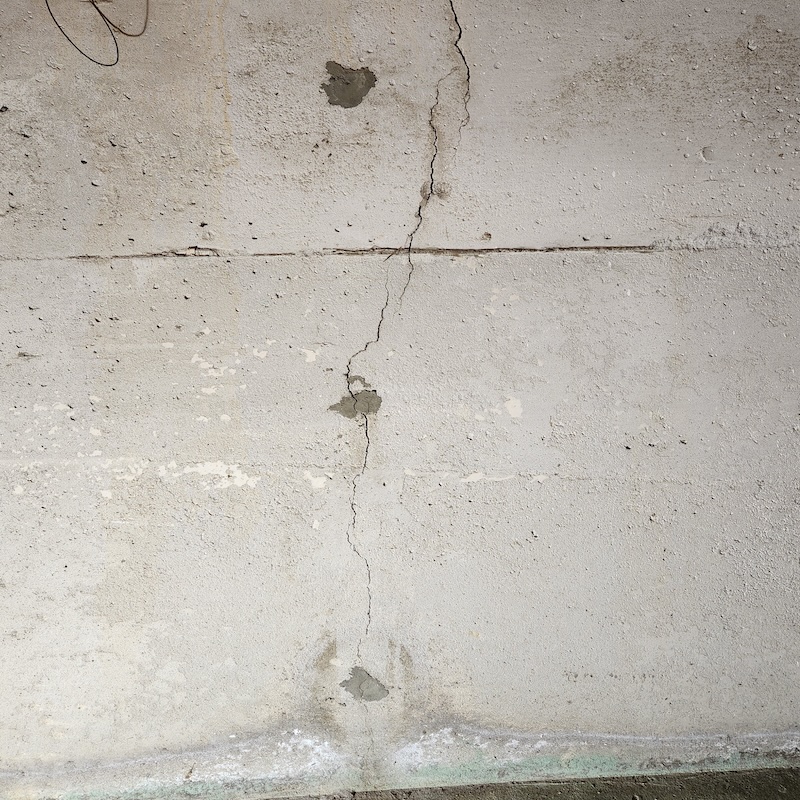
Concrete Shrinkage
As poured concrete cures, it naturally shrinks as excess water evaporates from the concrete, tensile stresses develop and narrow vertical cracking occurs in the foundation wall.
Foundation Settlement
Minor settlement or movement of the soil beneath the foundation wall can place stress on the foundation and cause cracking.
Poor Quality or Weak Concrete
Concrete that contains excessive water, was improperly cured, or lacks adequate strength may be more susceptible to cracking under normal structural and environmental stresses.
Freeze-Thaw Movement
Seasonal freezing and thawing can contribute to soil movement and foundation wall stresses, particularly where drainage conditions are poor.
Tie-Rod Holes and Weak Points
Poured concrete foundations contain tie-rod holes and other natural weak points. When stresses develop in the wall, cracks often form through or near these locations.
How We Repair Foundation Cracks From Inside the Basement
Most leaking poured concrete foundation cracks can be repaired from inside the basement using professional polyurethane crack injection. The goal is to fill the crack through the full depth of the wall so water can no longer use it as a pathway into the basement.
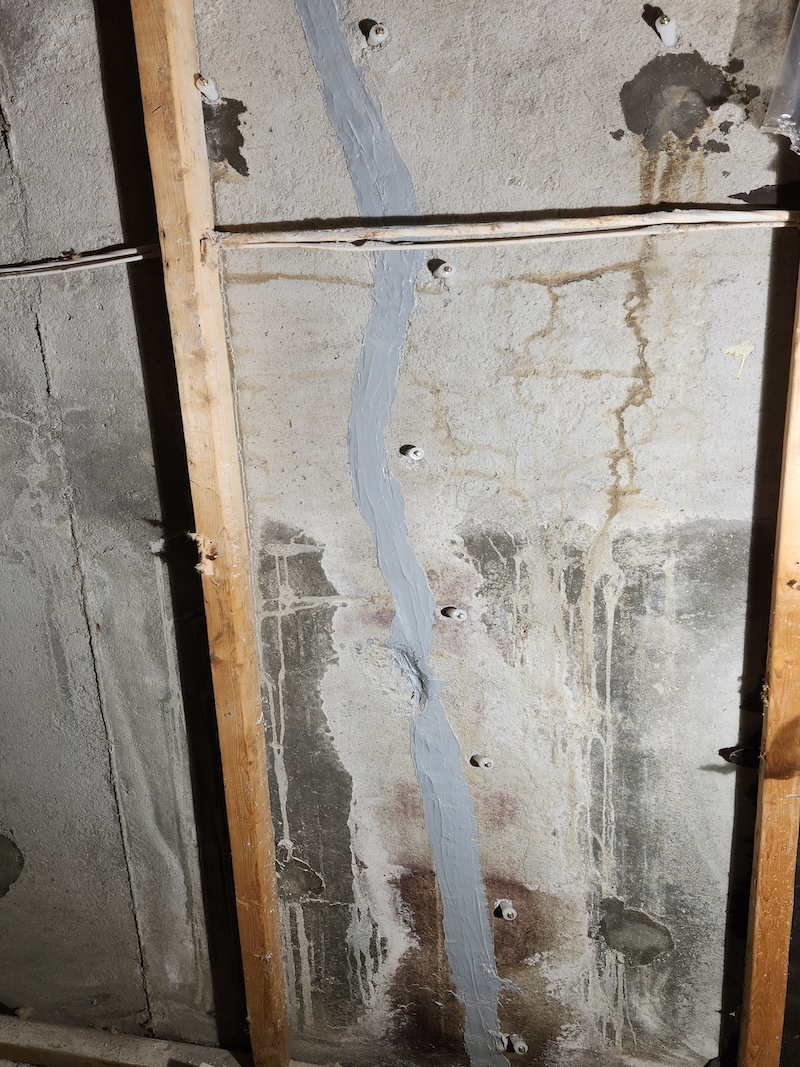
1. Prepare the Crack
The crack is sealed with epoxy paste and injection packers are installed to provide access to the full depth of the foundation wall.
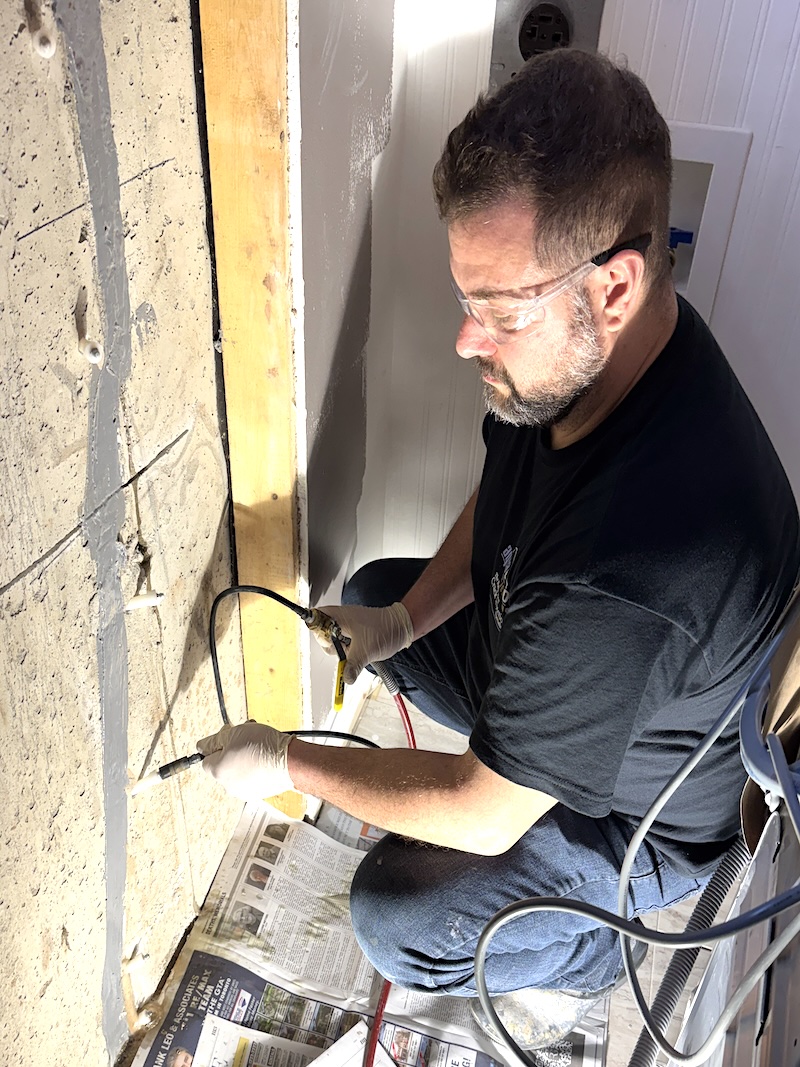
2. Inject Polyurethane
Polyurethane resin is injected under pressure through the packers and into the crack.
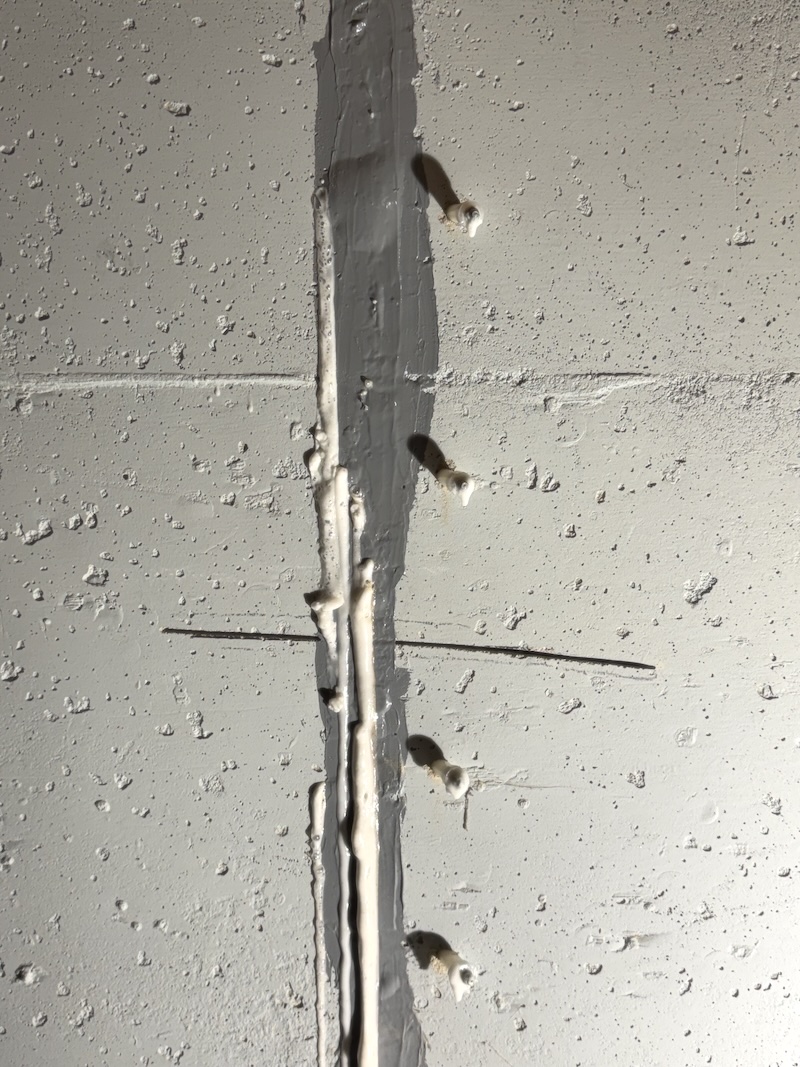
3. Verify Internal Flow
As the crack fills, polyurethane begins to emerge from other portions of the crack, confirming that the material is travelling within the wall.
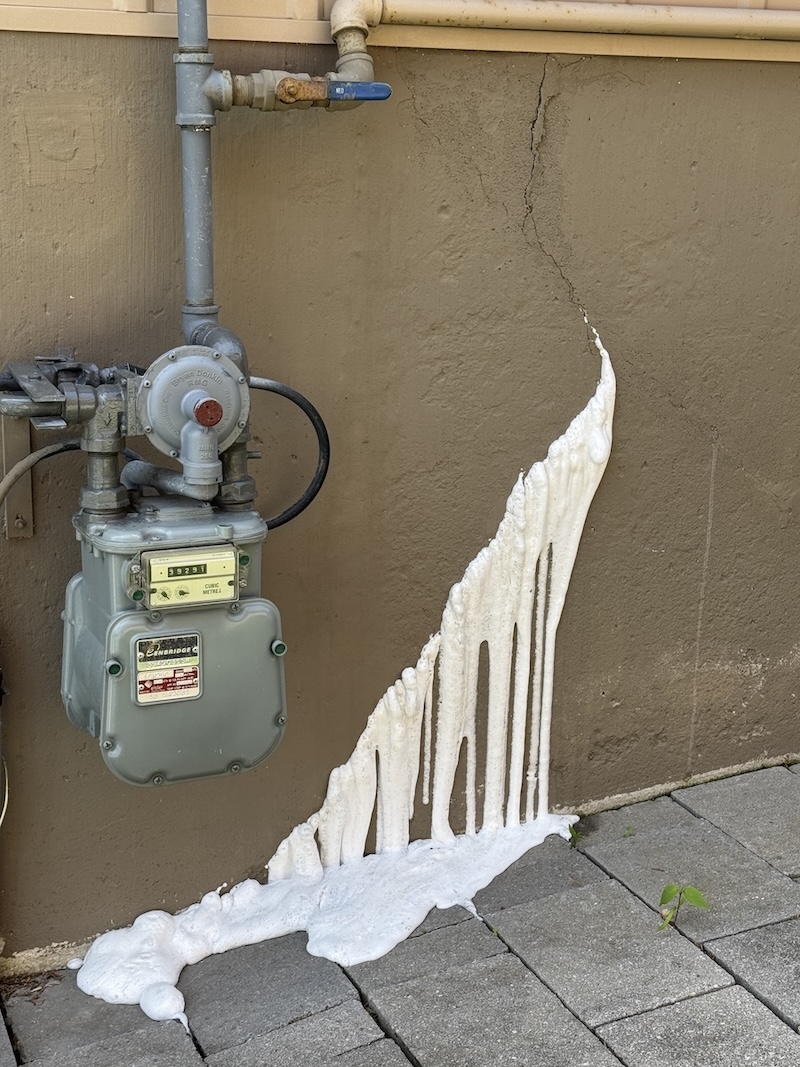
4. Confirm Full Penetration
Polyurethane visible on the exterior side of the foundation demonstrates that the crack has been filled through the entire thickness of the wall.
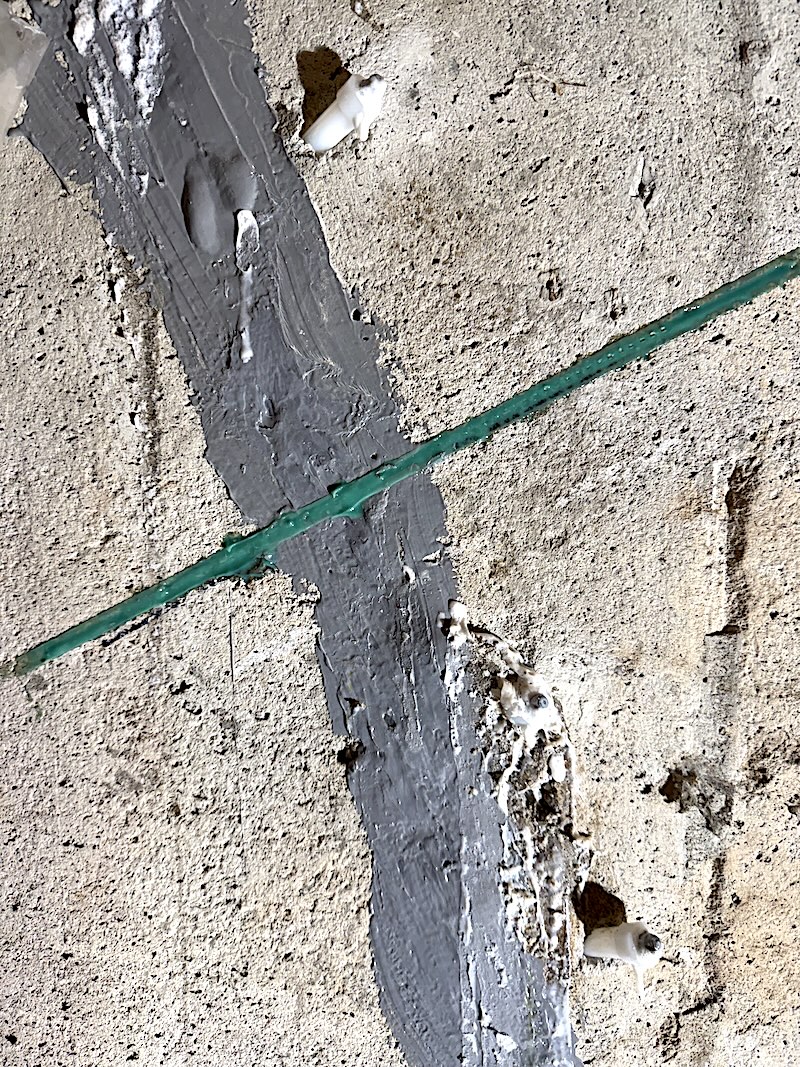
5. Reinforce When Needed
Carbon fibre stitches can be installed where crack movement is a concern, helping prevent future widening.
Our Crack Injection Process
- Seal the crack surface with epoxy paste to help prevent repair material from escaping during injection.
- Drill injection channels into the crack from the side, usually about every foot.
- Install injection packers so the crack can be accessed and filled under pressure.
- Rinse and flush the crack to remove mud, debris, and residue so the resin can move properly.
- Inject polyurethane resin repeatedly until the crack is filled through the wall.
- Add carbon fibre stitches when needed to help prevent future widening where movement is a concern.
We do not simply inject once and leave. The crack is filled, reinjected as needed, and checked so the repair is complete before we finish the job.
Watch an Actual Foundation Crack Injection Repair
This video shows a leaking foundation crack being repaired using polyurethane injection from inside the basement. Watch the repair process and see how material movement within the crack is verified during injection.
Why Some Foundation Crack Repairs Continue to Leak
Not every foundation crack repair is performed the same way. Some repairs fail because the crack was never properly sealed, cleaned, filled, or stabilized.
1. Surface Patches Do Not Stop Water
Cement, mortar, caulking, and other patching materials only cover the visible crack. Water remains trapped inside the foundation wall where it causes the concrete to deteriorate. These materials are not designed to permanently stop water under pressure, and leaks typically return during periods of elevated hydrostatic pressure.
2. The Crack Was Never Completely Filled
A successful crack injection requires repair material to travel through the full thickness of the foundation wall from the bottom to the top of the crack. If the crack is only partially filled, portions of the crack remain empty and water can continue to use those pathways. Mineral buildup, mud, debris, and extremely fine hairline cracks restrict the flow of repair material, which is why crack flushing is mandatory before injection.
3. The Injection Process Was Performed Incorrectly
Not all crack injection methods are equally effective. Over-pressurization can cause the surface seal to fail before the crack is filled. In other cases, repair material may not properly penetrate the crack because the injection method or equipment is not suited to the repair. High-pressure polyurethane injection relies on side-drilled injection packers that provide access to the full depth of the crack.
4. The Crack Continued To Move
Foundation settlement and seasonal movement can cause a crack to widen over time. When this occurs, a previously successful repair can be placed under stress. Carbon fibre stitches are designed to lock selected cracks in place and help prevent future crack movement.
Why AquaGuard Repairs Last
Our process includes side-drilled injection packers that provide access to the full depth of the crack, crack flushing to remove mineral buildup and debris, high-pressure polyurethane injection, verification of material movement within the crack, and reinjection until the crack is completely filled.
Where crack width or movement is a concern, carbon fibre reinforcement can be installed to help stabilize the repair. This proven process allows AquaGuard to provide a 25-year transferable warranty on foundation crack injection repairs.
Foundation Crack Repair Pricing
Foundation crack repair pricing depends on the crack, access to the repair area, and whether reinforcement is required. For a standard leaking poured concrete foundation crack that can be accessed from inside the basement, pricing starts at $745 + HST.
Standard Foundation Crack Injection
Starts at $745 + HST
Includes professional high-pressure polyurethane crack injection and a written 25-year transferable warranty.
What Can Affect the Price?
- Length and width of the crack
- Whether the crack is actively leaking
- Accessibility of the repair area
- Multiple cracks in the same basement
- Carbon fibre reinforcement where movement is a concern
Not Every Crack Can Be Injected From Inside
Most poured concrete foundation cracks can be repaired from inside the basement using high-pressure polyurethane injection. However, cracks located behind electrical panels, fireplaces, built-in cabinetry, finished bars, or other obstructions may require a different repair approach.
Compare the Repair, Not Just the Price
A crack repair is not just a crack repair. A properly performed injection should clean and flush the crack, fill it through the full thickness of the foundation wall, verify material movement within the crack, and include a written warranty.
All AquaGuard injection repairs are completed in a single visit once the repair has been assessed and scheduled.
Want a Preliminary Price?
Text photos of the crack to 289-366-1577 for a preliminary assessment and pricing guidance. In many cases, we can review the photos and provide preliminary pricing guidance before scheduling a visit.
Frequently Asked Questions About Foundation Crack Repair
How much does foundation crack repair cost?
Standard foundation crack injection repairs start at $745 + HST. Pricing depends on crack length, accessibility, and whether reinforcement is required.
Can foundation cracks be repaired from inside the basement?
Most poured concrete foundation cracks can be repaired from inside the basement using high-pressure polyurethane injection. Some cracks located behind electrical panels, fireplaces, built-in cabinetry, or other obstructions may require a different repair approach.
Is polyurethane better than epoxy for leaking foundation cracks?
Epoxy and polyurethane are both effective repair materials, but the success of a foundation crack repair depends as much on the injection process as it does on the material itself. Epoxy is a structural adhesive that bonds concrete together and is often stronger than the concrete itself.
However, many leaking foundation cracks contain mineral buildup, mud, debris, or extremely fine openings that restrict the flow of repair material. In these situations, crack flushing is essential before injection. Without proper cleaning, repair material may not be able to travel through the full depth of the crack regardless of the product being used.
AquaGuard uses a high-pressure polyurethane injection process that includes crack flushing, side-drilled injection packers, verification of material movement within the crack, and reinjection until the crack is completely filled. This process is particularly effective for stopping water infiltration through leaking foundation cracks.
When structural reinforcement is required, carbon fibre stitches can be installed to help stabilize the crack while polyurethane provides the waterproof seal.
Not sure whether epoxy or polyurethane injection is appropriate for your situation?
Compare epoxy and polyurethane crack injection methods.
Does a foundation crack mean my foundation is failing?
No. The vast majority of foundation cracks do not mean that the foundation is failing. Most foundation cracks are caused by normal concrete shrinkage during curing and can be repaired successfully using polyurethane crack injection.
Some cracks are caused by foundation settlement, but even settlement cracks do not necessarily indicate structural failure. In many cases, the foundation has simply moved and the concrete has cracked as a result.
The width and characteristics of the crack are often more important than the fact that a crack exists. Wide cracks, ongoing movement, or displacement along the crack may require additional evaluation. However, most leaking foundation cracks can be repaired without structural work.
How long does a polyurethane crack injection last?
When properly performed, polyurethane crack injection can provide a long-term repair. AquaGuard backs qualifying crack injection repairs with a written 25-year transferable warranty.
Can I send photos for a preliminary assessment?
Yes. In many cases, photos allow us to identify the likely cause of the leak, determine whether crack injection is an appropriate repair, and provide preliminary pricing guidance before a visit is required.
Need Help With a Leaking Foundation Crack?
Whether the crack is actively leaking, has been repaired before, or you’re unsure of the cause, AquaGuard can help.
In many cases, we can determine whether high-pressure polyurethane crack injection is an appropriate repair before scheduling a visit.
Since 2002, AquaGuard has repaired thousands of leaking foundation cracks throughout the Greater Toronto Area. We are proud Better Business Bureau members with an A+ rating and back qualifying crack injection repairs with a written 25-year transferable warranty.